What if you played at being an artist with AI?
Published
Suno, Spotify, and Kie.ai: how AI let me play at making music and canvases — without being a musician or a painter.
I’ll start with a confession.
I can’t sing Happy Birthday in tune.
I’m not a musician. I’m not a painter either.
And yet I now have three albums on Spotify, and I decorate my home with “canvases” I made with AI.
Does that make me an artist?
I’ll leave the real artists to debate that one. 😄
But AI now lets me play at creating.
🎵 Making music with Suno
For music, I use Suno, a service I use in its paid version.
I can start with:
- a story;
- a few lyrics;
- a memory;
- an emotion;
- a musical style.
Suno can then generate the voice, the instruments, and the music.
I listen to the result, I change my instructions, I rewrite lyrics, I try something else, and I start again.
That’s how a guy who can’t sing Happy Birthday ends up with three albums on Spotify. 😄
🎧 Listen to my creations on Spotify
🎨 Creating images with Kie.ai
For images, I especially use Kie.ai, another paid service.
Kie.ai gives access to several AI models that can generate images, video, and other content.
In my case, I really like the work of the painter Gal Kajoum.
So I had fun using his artistic world as a source of inspiration to explore my own scenes, colors, and compositions with AI.
Here are two images I made:
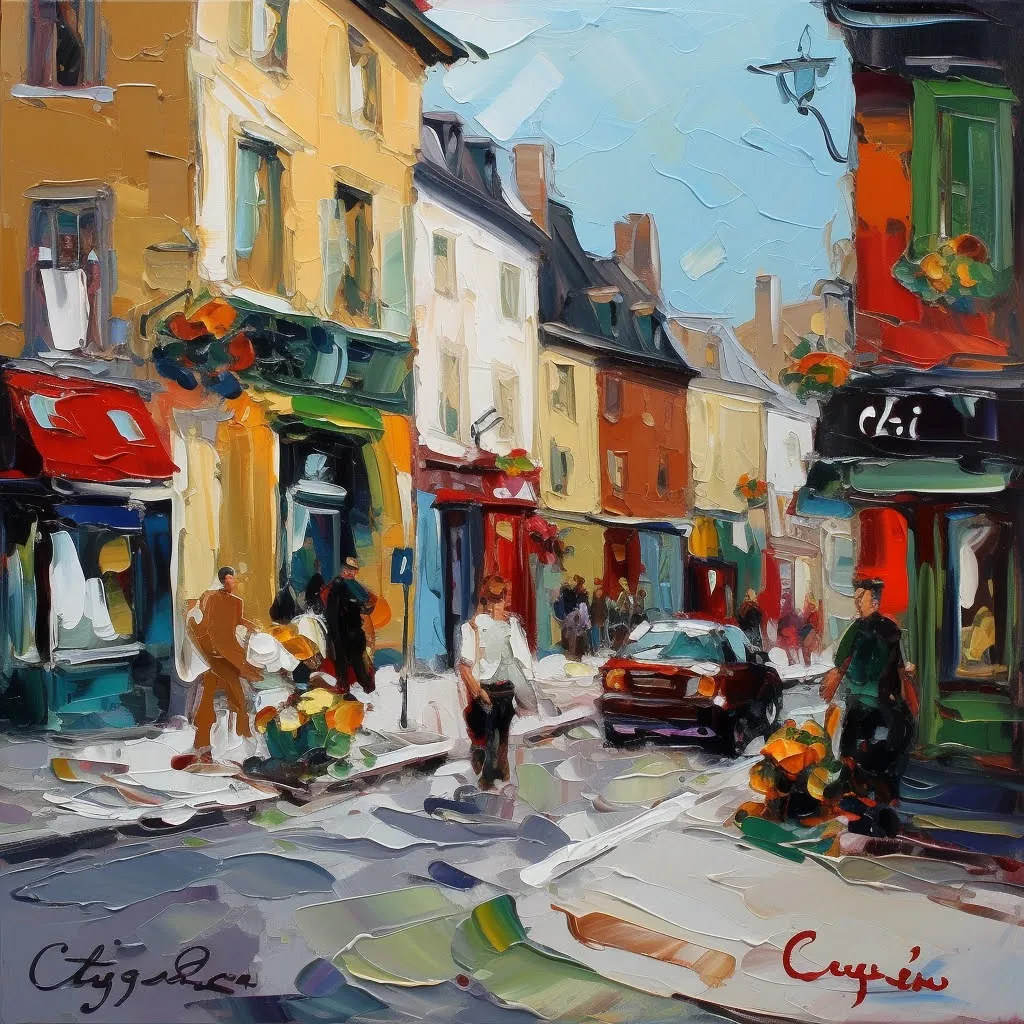
One of my creations made with AI, inspired by Gal Kajoum’s artistic world.
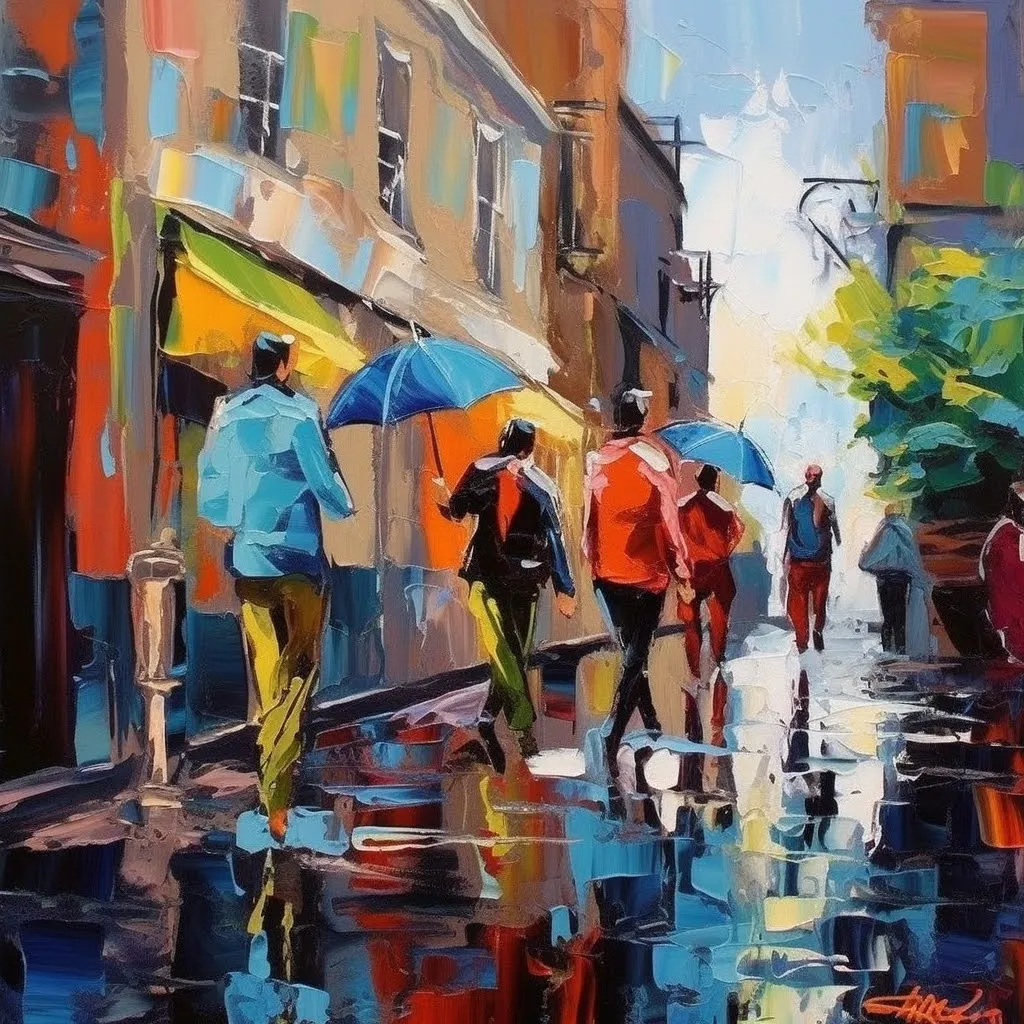
Another of my experiments with AI.
And I don’t just leave them on my computer.
I have some of these creations printed as canvases to decorate my home.
An idea that starts as a few words on a screen can become a physical object hanging on my wall.
I find that pretty extraordinary.
🧠 Is that really creating?
This is where it gets interesting.
AI does a large part of the technical work, but I still have to decide:
- what I want to create;
- which direction to take;
- what I like;
- what I want to change;
- what I keep;
- what I throw away.
The process often looks like this:
Idea → AI → result → critique → change → AI → result
So the prompt is only the beginning.
With these tools, one skill becomes especially important:
Knowing what you like and being able to guide the AI toward it.
🎨 Drawing inspiration without claiming to be the artist
There’s also an important distinction.
In my case, Gal Kajoum is an inspiration.
The images shown here are obviously not works by Gal Kajoum. They are my experiments made with AI.
And if you want to publish or sell creations, you need to go further and check the rights, licenses, and terms of use of the tools you use.
Making something for your living room and selling it are two different things.
🍳 The simple version
I didn’t become a singer or a painter.
But AI has greatly shortened the distance between:
“I have an idea.”
and:
“Look what I made.”
Suno lets me play with music.
Kie.ai lets me play with images.
And above all, these tools let me explore a kind of creativity I probably never would have explored this way before.
So my advice?
Don’t necessarily try to become an artist. Play at being one.
You might be surprised by what you create. 🎨🎵🤖