Phishing: how to spot scammers’ traps?
Published
Hang up, call back on the usual number, and never give your password, PIN, or verification code to someone who contacts you.
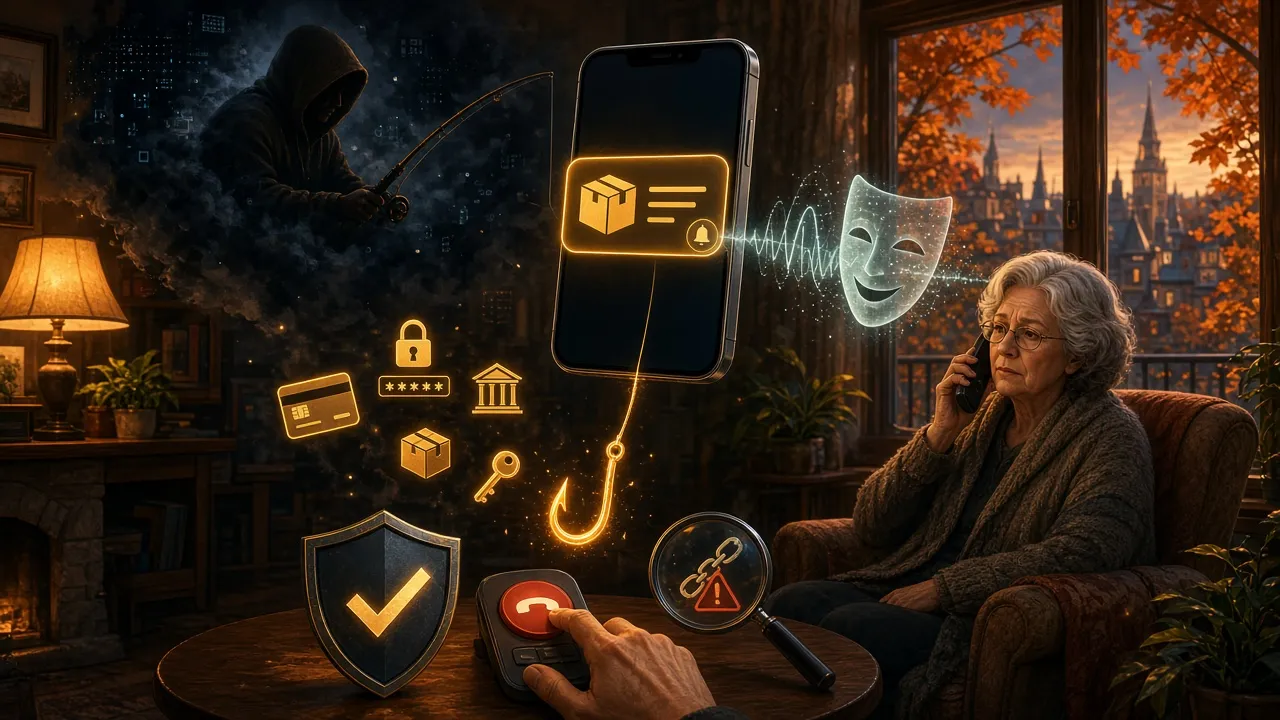
You get a text from Canada Post saying a package can’t be delivered.
You’re asked to click a link to confirm your address and pay a few dollars.
You’re waiting for a package!
The message seems credible.
That’s exactly the kind of situation scammers try to create.
But today, fraud goes much further than a simple text.
🎭 What if a loved one called for help?
You get a call from someone close to you.
Their voice is familiar. You recognize it right away.
They explain they’re in an emergency and need money quickly.
Yet it might not really be them!
Thanks to artificial intelligence, scammers can now imitate the voice of a child, a grandchild, a spouse, or a friend.
They can use audio clips to reproduce a voice and make their story more believable.
Recognizing a voice is therefore no longer enough to confirm the identity of the person calling you.
📞 The right reflex: hang up and call back!
If a loved one calls claiming to be in trouble and asks you for money:
- Hang up, even if the voice sounds perfectly authentic.
- Call your loved one back at their usual number—the one you already have in your contacts.
- If you can’t reach them, contact another family member.
- Don’t transfer any money until you’ve confirmed the situation.
Don’t simply call back the number shown on the suspicious call. Use the one you already know.
🎣 What is phishing?
Phishing is a fraud technique that consists of posing as a trusted organization or person in order to steal information from you.
Scammers may in particular try to obtain:
- your passwords;
- your banking information;
- your credit card number;
- your verification codes;
- access to your personal or work accounts.
The name comes from fishing: the scammer casts bait and waits for someone to take the hook!
Imitating a loved one’s voice is a form of identity theft and phone fraud, rather than a classic example of email phishing. But the principle remains similar: exploiting your trust to push you to act.
🎃 Right now: Halloween texts
A wave of Halloween-themed scam texts is currently circulating in Quebec, in both French and English.
The messages announce an invitation to a costume party, treats set aside for you, a lottery win, or a $500 grocery gift card. You’re then asked to click a link and enter your personal information, sometimes even your credit card number, to “claim” your prize.
Yet the website’s name has nothing to do with the store it claims to represent.
To learn more (in French): Textos frauduleux : Halloween exploitée par des fraudeurs pour piéger des Québécois (Journal de Montréal, October 29, 2026).
📱 The most common traps
Scammers use different scenarios to grab your attention.
📦 The blocked package
“Your delivery is on hold. Confirm your address immediately.”
🏦 The bank account
“Suspicious activity has been detected. Click here to secure your account.”
💰 The refund
“You’re entitled to a refund from the Canada Revenue Agency.”
🔐 The expired password
“Your Microsoft account will be deactivated if you don’t confirm your identity.”
These messages usually have one thing in common: they want you to act quickly, without taking time to think.
💳 Watch out for requests for banking information!
This is a particularly important rule.
A legitimate merchant does not need to know your banking password, your PIN, or your verification code to refund a purchase.
Imagine receiving this message:
“We need to refund you $12.95. Click here and enter your banking information to receive your money.”
Be wary!
A merchant may need certain payment details to process a transaction, but they should never ask for your banking login credentials.
In many cases, a refund can be issued directly to the payment method used for the purchase.
Never share your banking password, your PIN, or a security code received by text with someone who contacts you.
If in doubt, contact the merchant or your financial institution directly.
🔍 How to recognize a fraud attempt?
Here are a few warning signs:
- Urgency: you’re asked to act immediately.
- Fear: your account would be locked or a loved one would be in danger.
- A suspicious link: the address doesn’t match the real site.
- An unusual request: they’re asking for passwords, codes, or money.
- Secrecy: you’re asked not to tell anyone about the situation.
In the past, spelling mistakes sometimes made it easy to spot fraudulent messages.
Today, AI can produce highly convincing messages, in impeccable English.
A well-written message or a familiar voice therefore no longer guarantees authenticity.
🛡️ The best reflex: verify another way!
You get a message from your bank?
Don’t use the link in the text.
Open your usual banking app instead.
You get a call from a loved one asking for money urgently?
Hang up and call them back at their usual number.
A merchant asks for banking information to issue a refund?
Contact their customer service from their official website.
The principle is always the same: don’t verify a suspicious request using the contact details provided in that same request.
🚨 What if you fell for the trap?
Act quickly.
- Password shared: change it immediately on the real site.
- Banking information given: contact your financial institution.
- Money transferred: report the situation to your bank right away.
- Suspicious file downloaded: have your device checked.
- Fraud confirmed: report it to the Canadian Anti-Fraud Centre.
Even if you haven’t lost money, reporting a fraud attempt can help protect other people.
🍳 The simple version
Phishing consists of posing as someone trustworthy in order to steal your information or your money.
Today, scammers can use artificial intelligence to write fake messages, create deceptive sites, and even imitate the voices of people close to you.
Remember three reflexes:
- Your bank or a merchant asks for your password, your PIN, or a verification code? Never give it.
- A loved one asks you for money urgently? Hang up and call them back at their usual number.
- A message pushes you to click immediately? Verify directly with the organization.
Don’t trust only what you read or hear. Take the time to verify.
A few seconds of caution can spare you a lot of trouble.
☁️ luc.cloud — Tech, simply.